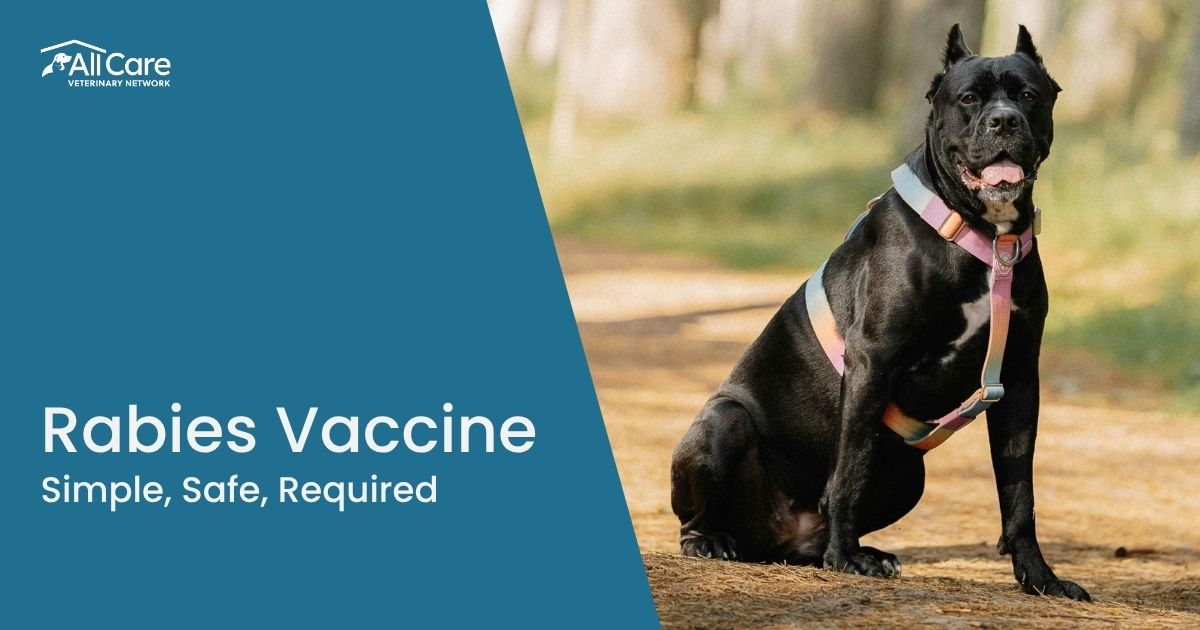
Rabies is a disease every pet owner should know about. The disease is one of the easiest to prevent and is rare in vaccinated pets, and Georgia law requires the shot for every dog and cat. Keeping your pet current takes one quick visit.
Here is what rabies is, how it spreads, and why the vaccine matters.
Rabies is a viral disease that affects the nervous system in mammals. What sets it apart from most infections is timing. A long stretch, often weeks to months, can pass between exposure and the first signs of illness, so an animal can carry the virus without looking sick. There is no treatment once symptoms begin, so prevention through vaccination is what keeps pets safe.
Rabies passes from one animal to another through infected saliva. A bite is the usual route, though it can also spread when saliva reaches a scratch, an open wound, or the eyes, nose, or mouth.
In Georgia, the virus lives mostly in wildlife, and raccoons are the state's main carrier, followed by bats, foxes, and skunks. Your pet does not have to wander far to run into one:
There are two reasons why rabies should be taken seriously:
The rabies vaccine trains your pet's immune system to recognize and fight the virus before it can take hold. It is a well-established vaccine that has been used safely for decades.
Most puppies and kittens get their first rabies shot around twelve weeks old, with a second dose a year later. After that, Georgia sets the schedule by county. Many counties run on a three-year vaccine, while others require a dose every year. We will keep your pet on the right cycle based on where you live and issue the matching certificate.
The first signs of rabies usually show up as a change in how an animal acts, which is easy to mistake for a bad day. Watch for:
If you notice these signs in any animal, keep your distance and call animal control or your veterinarian.
If your pet is bitten or scratched by a wild animal or a stray, contact your veterinarian right away and keep your pet away from other animals and people.
A pet that is current on its rabies vaccine will usually get a booster and a period of observation. An unvaccinated pet faces far stricter measures, which can include a long quarantine. Staying current on the vaccine keeps a scary situation from becoming a far more serious one.
Rabies is preventable.
If you are not sure if your pet is current with the vaccine, ask your vet. For patients at All Care Veterinary Network, call us at (770) 526-9678 or check your records on the PetPage app.
Wellness exams are recommended to keep your pet up-to-date. At each visit, we will review your pet's records and discuss vaccines needed. It's an opportunity to discuss your concerns and help keep your pet happy and healthy.
To schedule:
Schedule Online Call (770) 526-9678
Pet Prime members keep core vaccines like rabies on a simple annual schedule, so nothing slips through the cracks. Ask us about Pet Prime at your next visit.
FAQs