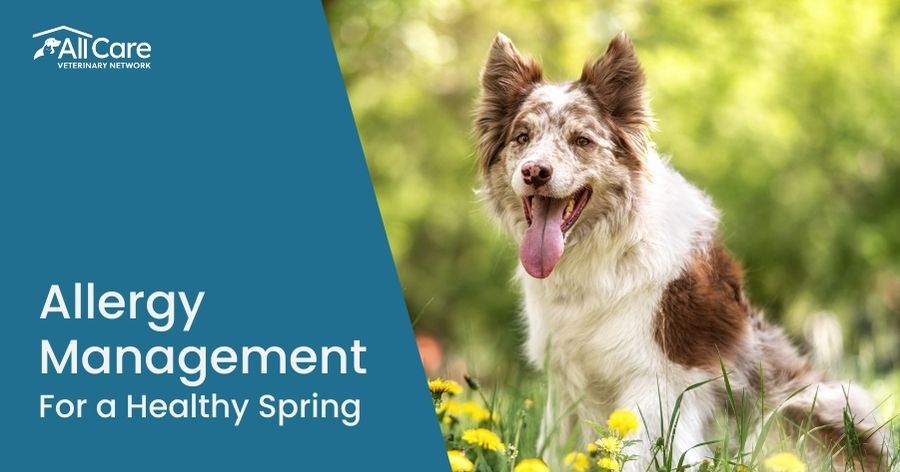
If spring in Georgia makes your eyes water, imagine how your dog feels rolling in that pollen.
While we may reach for tissues, dogs and cats often respond to seasonal allergies with itchy skin, irritated ears, and lots (and lots) of scratching. Let’s break down what’s happening and how to keep your furry friend feeling paw-some all season long.
Georgia's extended growing season means pollen lingers in the air for much of the year. Communities throughout Metro Atlanta like Conyers, Covington, and Social Circle are filled with trees and grasses that produce heavy pollen, making environmental allergies especially common in local pets.
Common allergy triggers for dogs and cats in our area include:
Unlike people, dogs and cats usually show allergies through their skin rather than sneezing. So if your dog is scratching like it’s an Olympic sport, allergies could be the culprit.
Watch for these signs in your dog or cat:
At All Care Veterinary Network, we look at your pet’s history, perform a thorough exam, and rule out other causes like fleas or food allergies. Sometimes pet allergy testing is recommended to pinpoint triggers and guide treatment.
Not every itch is created equal. Our veterinarians will tailor your pet’s dermatology care based on symptoms and lifestyle.
The good news? Your pet doesn’t have to suffer through sniffle season. Our goal is to provide pet allergy treatments that will stop the itch-scratch cycle, calm inflammation, and prevent recurring infections. Basically, we want your pet to feel fur-tastic again.
Allergy treatment plans from our veterinarians may include:
While we handle the medical side, you can help your dog or cat, too. Keep in mind that even indoor pets aren’t fully protected since pollen can hitch a ride inside on shoes and clothing.
If your pet’s itching lasts more than a few days, disrupts sleep, or keeps coming back season after season, it’s time to call. Early dermatology treatment prevents infections and keeps mild allergies from becoming a bigger problem.
Spring is meant for sunshine, park days, and backyard zoomies, not nonstop scratching. Your pet deserves to enjoy the season comfortably.
If your dog or cat is struggling with allergies, our veterinary team at All Care Veterinary Network is here to help. Let’s get them back to chasing squirrels, not symptoms. Call us at (770) 526-9678 or schedule a veterinary exam online to get started.
Not all dogs require testing. Some respond well to medication, while others benefit from allergy testing to guide immunotherapy.
Yes. Cats often show allergies through excessive grooming, hair loss, and skin irritation.
Tree pollen typically starts in early spring, grass pollen peaks in late spring and summer, and mold can be present year-round in humid conditions.